

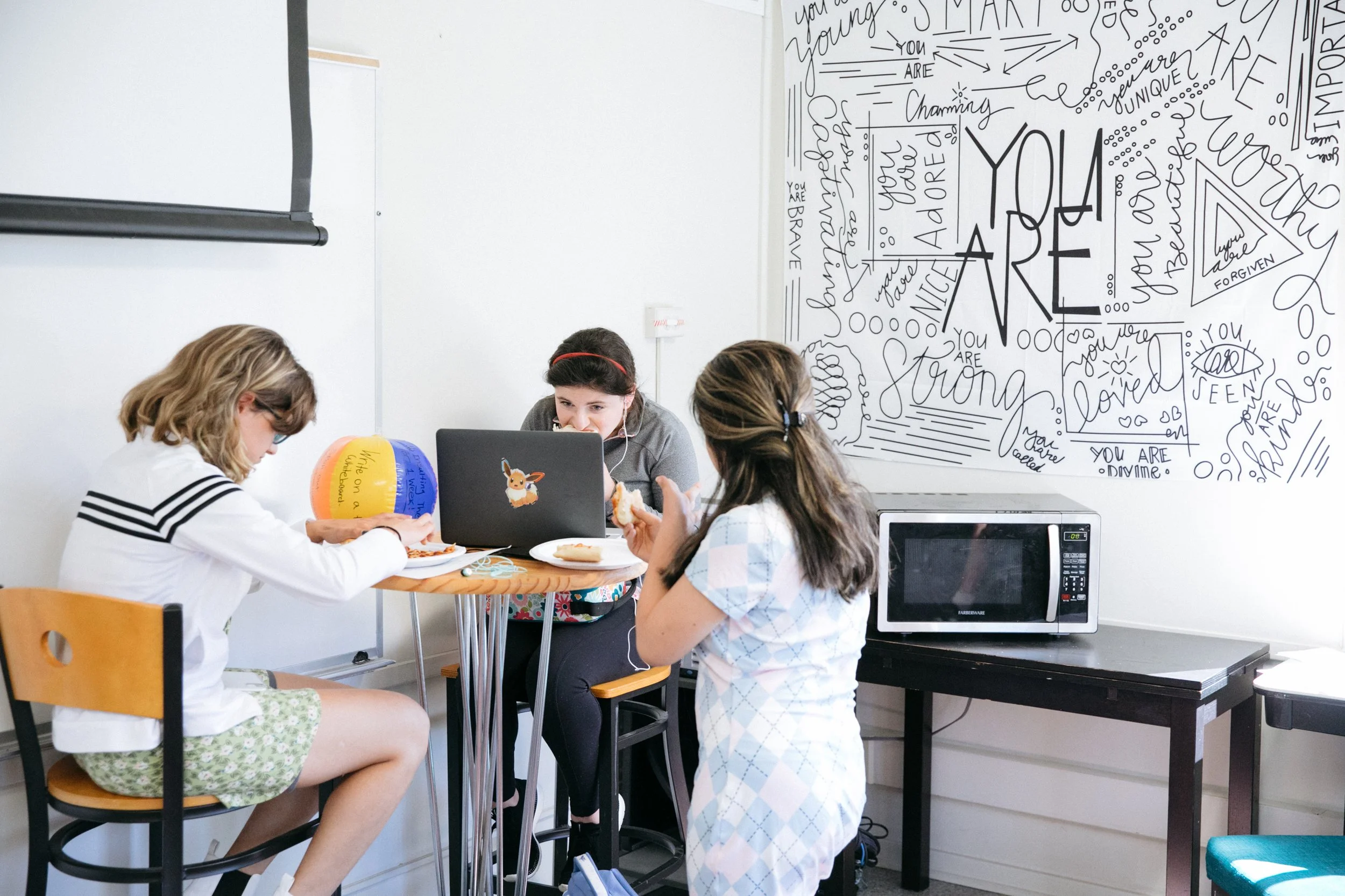
The Compass Purpose
Compass was founded on a simple belief: Students thrive when they are understood, challenged, and supported as their authentic selves.
Instead of asking students to adapt to a one-size-fits-all educational model, Compass was intentionally designed around learner variability. Our approach recognizes that there is no single “right” way to learn, solve problems, communicate, or demonstrate understanding.
We prepare students not only to succeed in high school, but to understand themselves well enough to thrive wherever life takes them.
Our Philosophy
Learning is deeply personal.
Students grow when they experience belonging, develop meaningful relationships, and are challenged within an environment that recognizes both their strengths and their support needs.
At Compass, academic excellence and personal growth are inseparable. Because success isn’t about becoming someone different. It’s about becoming fully yourself.
Compass prepares students to understand how they learn, advocate for what they need, contribute to their communities, and build meaningful futures with confidence, purpose, and resilience.
Who Thrives at Compass?
Compass is the right place for students who:
Learn differently than traditional schools expect.
Benefit from smaller classes and meaningful relationships.
Want academic challenge in a supportive environment.
Are academically capable but haven’t always felt understood.
Learn best through strong relationships and personalized instruction.
Are ready to build confidence alongside independence.
Value authenticity over fitting into someone else’s expectations.
Many of our students identify as autistic, ADHD, dyslexic, twice-exceptional, or have other learning differences. Others simply thrive in a school intentionally designed around learner variability.
Our program is designed for students who…
Have mild to moderate learning differences
Have language-based reading disabilities that affect decoding, fluency, and comprehension such as dyslexia
Have average or above average cognitive abilities
Have executive function difficulties that may impact reading comprehension, written expression, organization or problem-solving ability
Have mild emotional or attentional difficulties and social skills deficits that do not disrupt classroom learning
Are considering continuing their education at a two-year or four-year college